
There’s a lot of noise around AI in recruitment right now.
Some people are selling it as a silver bullet. Others are warning it will wipe recruiters out completely.
Neither is true.
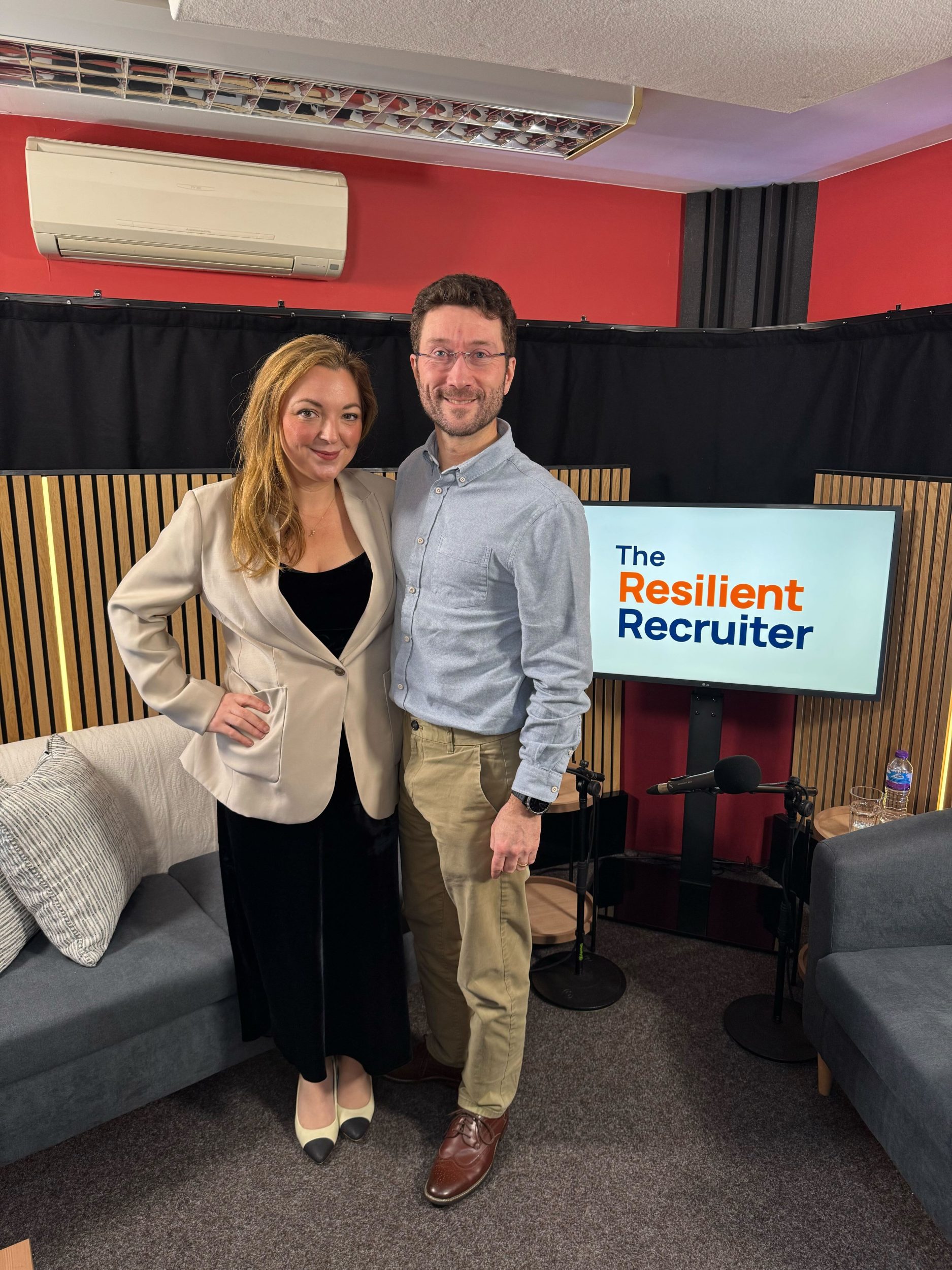
Rebecca Hastings isn’t commenting from the sidelines. She advises CEOs, boards, and AI leaders on governance, strategy, and implementation. She’s read over 300 case studies of successful and failed AI transformations in the last month alone. She sees exactly where AI creates leverage and where it quietly breaks things.
Rebecca is the founder of Lucent Search and part of our Recruitment Coach coaching team. She’s built a retained-only executive search business focused on senior AI leadership, and she works directly with organisations designing multi-year AI transformation strategies. That combination gives her a perspective most recruiters never get access to.
As Rebecca put it during our conversation:
“AI doesn’t make things faster. AI only makes things faster once you can scale the human capacity inside your business.”
That insight sits at the heart of this episode.
In this conversation, we unpack why AI won’t replace recruiters but will expose weak businesses, how to build market expertise that AI can actually amplify, and the sales system Rebecca used to book more meetings than anyone else without making the most calls.
Episode Outline and Highlights
- [3:42] How Rebecca billed £360,000 in her first year and why it wasn’t luck
- [8:17] The daily discipline that mattered: protected time blocks and KPIs that moved the needle
- [14:08] Two lessons from Harvey Nash that shaped Rebecca’s approach to downturns
- [23:14] Why attending 3-4 industry events per month isn’t excessive
- [27:05] How hosting a podcast became a shortcut to deep market knowledge
- [32:17] Why listening time matters more than talk time
- [38:12] 670 voicemails in one day and what recruiters miss client-side
- [44:08] Why Rebecca went 100% retained and kept 60-80% of her clients
- [59:37] Why there won’t be a job apocalypse
- [1:01:09] The bottleneck most recruiters miss when adopting AI
- [1:06:21] How to earn trust in how you use AI
- [1:11:16] Why psychological safety determines whether AI succeeds
- [1:15:26] Rebecca’s multichannel sales system
- [1:24:31] How she booked the most meetings without making the most calls
Why AI Won’t Replace Recruiters – But It Will Expose Weak Businesses
Rebecca is very clear about this.
There is no job apocalypse coming for recruiters.
What is coming is a learning curve. And businesses without clarity, process, or judgment will struggle.
“There is not going to be this job apocalypse. Jobs will change, yes. But AI will not work without the context of humans.”
What Rebecca sees repeatedly in AI transformation projects is that organisations don’t lose people. They redirect them.
Automation handles repetitive tasks. Humans handle judgment, context, and relationships.
The problem is that AI doesn’t magically make work faster. It only accelerates work once human capability is already in place. Without clear processes and trained judgment, AI simply shifts bottlenecks to another part of the system.
Rebecca saw this first-hand while working on an AI transformation project with a large energy company.
Auto-populating CRM fields from call recordings saved hours of admin time. On paper, it looked like a win.
But now those entries needed to be reviewed and approved. And when the team was still learning the role, that “quick review” required careful reading and thinking instead of a glance and a click.
The bottleneck hadn’t disappeared. It had moved.
That’s why Rebecca believes learning and development will matter more than tools over the next few years. AI only moves as fast as your team’s expertise allows.
She also breaks down where AI does create real value for recruiters today:
- Candidate sourcing and matching: distilling large volumes of data into transparent shortlists
- Business development: alerts that show when existing clients open new roles so you can be proactive
- Temp desk management: what Rebecca calls “the automation of automation”
The common thread is simple. AI works best when the thinking is already done.
Building Market Expertise That AI Can’t Replace
Rebecca tracks something most recruiters don’t.
Listening time.
Not talk time. Listening time.
“If I’ve got less than 10 to 12 hours of listening time in a week, I know I’m not having enough deep conversations.”
Those hours aren’t pitches. They’re conversations where the other person is doing most of the talking and Rebecca is learning.
That habit started early. At Hays, her days were tightly structured. 10am-12pm was business development. 2pm-4pm was interviews and skills assessments.
The structure created discipline. The discipline created results. £360,000 in her first year.
That foundation still shapes how she works today.
She attends three to four industry events per month. She hosted a podcast for years, interviewing CEOs and C-suite leaders. She runs surveys and conducts direct research. Last year alone, she spoke with around 100 C-level AI and data leaders to understand their real challenges.
“That’s a great way to network and also validate. Out of all the respondents, I know that people who demonstrated these behaviours were more successful.”
All of this builds something AI can’t create: deep market knowledge.
As Rebecca said: “Marketing only works if you truly understand your market. You can know everything about marketing and still be terrible at it if you don’t know your market.”
This is also why she moved away from contingent work and went fully retained. Focus gave her depth. Depth created credibility. And credibility is what clients pay for at senior levels.
When she made the switch, she kept between 60 and 80 percent of her clients.
“I definitely lost some customers, but I was fine with that. Not all customers are good customers.”
Not all clients left. Only the wrong ones did.
The Sales System That Books Meetings Without Burning You Out
Rebecca won Recruitment Coach’s Cold Calling Competition this year.
Not by making the most calls. By booking the most meetings.
Her conversion rates were unusually high because she only spoke to one type of person: CEOs, CTOs, and heads of AI in her niche.
And she led with something they couldn’t get anywhere else. Insights from her Global AI Leadership Report. Not a salary survey. Real intelligence gathered from peer conversations.
“I had something unique and of value they could learn from their peers that they did not know. And I knew I was talking to them about something they were under pressure about.”
She wasn’t asking for 15 minutes. They wanted to talk.
But the real work happens before she ever picks up the phone.
The Six-Month Multichannel System
Rebecca runs a six-month multichannel sales process that removes cognitive load rather than adding to it.
Step 1: LinkedIn connection
Step 2: Automated company research using GPTs
Step 3: Prospects enter a structured cadence based on available contact details
Step 4: AI drafts options, Rebecca reviews and approves
“Something that used to take me hours now takes about an hour.”
The key is that the process came first. The automation came second.
Most recruiters want AI to fix chaos. But AI can’t fix what isn’t defined.
There’s another layer here too. Clients and candidates care how you use AI. Under frameworks like the EU AI Act, high-risk decisions require humans in the loop. That isn’t opinion. It’s law.
The firms that win will be able to say:
This is what we automate. This is where human judgment sits. And this is how it protects you.
That clarity builds trust.
Rebecca also points to psychological safety. If people don’t feel safe surfacing problems, systems don’t improve. AI simply amplifies whatever culture already exists.
If you want to understand where AI genuinely helps recruiters and where it quietly causes damage, this episode is well worth your time.